EDITORIAL

CLINICAL MEDICINE. REVIEWS
Incisional ventral hernia surgery is a relevant medical area. Despite the issue’s long history, researchers have not found an optimal approach to incisional hernia surgical treatment that would satisfy both the patients and surgeons. Within the aforementioned problem, the most complex task is the large and recurrent ventral hernia surgery. This article analyzes scientific works on the current trends in incisional hernia surgery published in PubMed, Cochrane, Web of Science, eLIBRARY.RU, and other databases over the past 10 years. In the past decade, scientists increased knowledge of patient stratification methods, prediction of complications and recurrence risks, as well as advanced computed tomography diagnostics. Optimizing presurgical treatment for patients with incisional hernia is aimed at improving the early and long-term hernioplasty results. Upgrading hernia mesh and its implantation methods makes hernia surgery safer and more effective. The other important research area is the presurgical relaxation of lateral abdominal muscles. In addition, the application of such methods as chemical separation, progressive pneumoperitoneum, intraoperative fascial traction, and a combination of the listed techniques have shown satisfactory and promising clinical results. The formed research vector contributes to enhancing the surgical treatment quality and personalizing medical approaches.
In the past decade, scientists have examined the effects of native type II collagen and its applicability in osteoarthritis treatment. The article presents results of the clinical study and meta-analysis, which confirm the possibility of using native (undenatured) type II collagen medications as part of comprehensive osteoarthritis treatment. Native collagen drugs slow the chondrolysis rate, reduce joint pain and inflammation, and improve joint and spine functioning as well as endogenous collagen synthesis. The studies show the safety and effectiveness of the specified medications in osteoarthritis pain management. In addition, native collagen drugs can mitigate the risks of adverse events in comorbid patients.
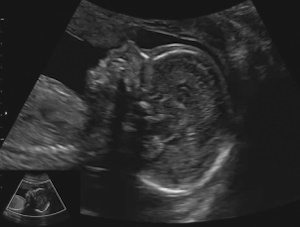
The article’s purpose is to assess the diagnostic utility of modern radiological research methods in the detection of acute extragenital pathology in pregnant women. The study is based on an analysis of recent Russian and foreign publications from Wiley and eLIBRARY.RU electronic libraries, PubMed, and other medical databases. The paper focuses on the safety and effectiveness of ultrasound scanning, magnetic resonance imaging (MRI), and computed tomography (CT) in different clinical cases, including appendicitis, cholecystitis, and pancreatitis during gestation. The methodology includes a systematic literature analysis aimed at correlating the sensitivity, specificity, and clinical feasibility of various medical imagining techniques with the patient’s gestation duration and condition. Moreover, the authors examine the regulatory restrictions and recommendations for ionizing radiation application, as well as peculiarities of contrast agents’ use. The research findings establish that ultrasound scanning and magnetic resonance imaging are the most clinically significant methods due to high diagnostic accuracy without noci-influence on the fetus. In exceptional cases, the use of a low-dose CT protocol is valid given the sole ground for the radiodiagnosis procedure. The study indicates that a patient’s refusal of imaging for acute conditions may increase the risk of adverse outcomes. The article concludes with an emphasis on the importance of a personalized approach to the imagining method selection. Thus, the process requires consideration of the gestation period, presumptive diagnosis, and clinical picture. The obtained data can be utilized in developing tactics for safe diagnostics in pregnant women as part of emergency care and routine follow-up.
CLINICAL MEDICINE. ORIGINAL RESEARCH
The article’s purpose is to analyze the effectiveness of infrared photocoagulation in hemorrhoids treatment. The retrospective single-center study conducted in the period from 2024 to 2025 reveals the results of treating 116 patients with chronic hemorrhoids. The research applies infrared photocoagulation for treating grade I–III hemorrhoidal disease. The authors assess the method’s effectiveness by the level of pain syndrome and complications frequency on days 3, 7, and 14 after photocoagulation, as well as disease recurrence probability three months after the procedure. Infrared photocoagulation is a minimally invasive method of treating grade I–III hemorrhoids. It shows a significant reduction in bleeding to 3.4% and a decrease in pain to 0–1 points on a visual analogue scale 14 days after the photocoagulation procedure. The aforementioned technique has the following characteristics: a low probability of developing such complications as pruritus (2.6%) and bleeding (3.4%) as well as short-term disability for 4 ± 2.3 days on average. Although the procedure exhibits high short-term clinical efficacy, a 25% recurrence of hemorrhoidal cushion prolapse is observed three months post-operation. Infrared photocoagulation is an effective treatment for chronic hemorrhoids. Nevertheless, the specified method requires further research aimed at reducing the frequency of disease recurrence.
Functional disorders of biliary tract in children are frequently diagnosed. The aim of the research is to indicate the biomarkers of hypokinetic gallbladder dysfunction using ultrasound scanning and laboratory data on abdominal cavity organs in children. The research includes 58 children and teenagers. The authors distinguish 2 groups based exclusively on the differences in the gallbladder (IV) phase of the multifractional duodenal intubation. In the control group (29 people), the gallbladder phase does not exceed 30 minutes, and the secreted bile amount is 50 ml. In the study group (29 people), either the gallbladder phase exceeds 30 minutes, or the secreted bile amount surpasses 50 ml. The specified groups are comparable in age and sex. The paper includes laboratory studies and ultrasound scanning of abdominal cavity organs, particularly the gallbladder, with an assessment of its length, diameter, and volume. According to the biochemical blood test, the mean values of total protein, alanine aminotransferase (ALT), and aspartate aminotransferase (AST) are statistically higher in children with gallbladder hypokinesia. However, the rate of abnormal test findings in the groups, as well as the results of the conducted ultrasound scanning of abdominal cavity organs in the children, show no significant differences. The bile length, diameter, and volume in children with the hypokinetic form of dyskinesia are 63.9 ± 1.81 mm; 20.7 ± 0.78 mm; 15.2 ± 1.38 ml, whereas in the control group the parameters are 65.1 ± 1.67 mm; 20.3 ± 0.83 mm; 14.9 ± 1.44 ml (р > 0.05). Therefore, ultrasound scanning demonstrates its lack of informative value in diagnosing the hypokinetic form of biliary dysfunction, especially gallbladder hypokinesia. Compared to a child's normal gallbladder functioning, the average ALT, AST, and total protein are significantly higher in children with the hypokinetic form of biliary dysfunction. Still, the aforementioned parameters do not surpass the standard values.
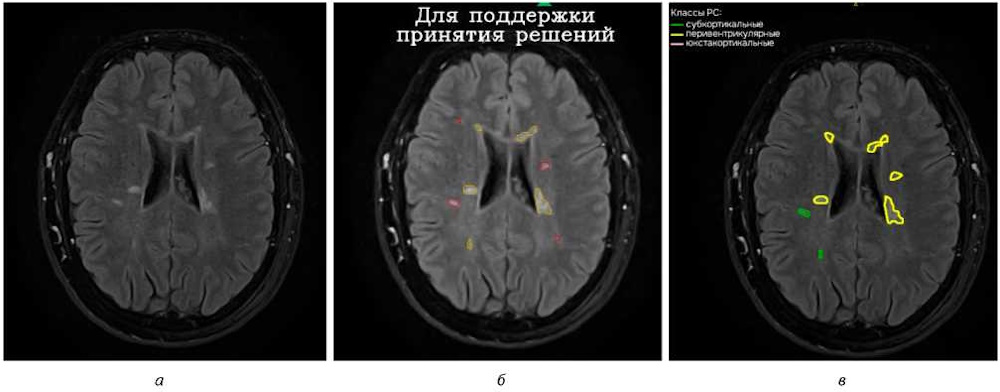
The article aims to examine the applicability of automated morphometry based on artificial intelligence (AI) technologies for assessing brain damage progression in multiple sclerosis (MS) using magnetic resonance imaging (MRI). The research defines the dependence of the demyelination lesions extent on age, sex, and monitoring period, as well as compares the clinical effectiveness of two artificial intelligence services. The authors analyze the retrospective data of 142 patients diagnosed with MS. The selection criteria include age ≥ 18, brain MRI with contrast agents ≥ 3 (at regular intervals ≥ 6 months). The paper studies two AI-services, i.e. IMV-MS and NtechMed MRI Brain, which are integrated into the Unified Radiological Information Service. The analysis comprises the mixed-effects model given the following characteristics: age, monitoring period, and artificial intelligence services processing the disease progression. The extent of the demyelination lesions has significantly decreased over time (44.5 mm3/month on average, p < 0.001). The one-year age increase is associated with the 434.2 mm3 (p = 0.001) increase in lesion volume. Sex has no influence on disease progression (p > 0.05). The study has shown statistically significant differences between AI-services in the disease progression assessment (β = 39.9; p = 0.005), which indicates the necessity of algorithm standardization. The AI-based automated morphometry is a promising research area for an objective evaluation of multiple sclerosis progression using magnetic resonant imaging. The research results confirm its applicability in clinical practice. Nevertheless, the diversity of data provided by the AI-services requires strict quality control, clinical validation, and post-registration monitoring.
CLINICAL MEDICINE. CLINICAL CASE
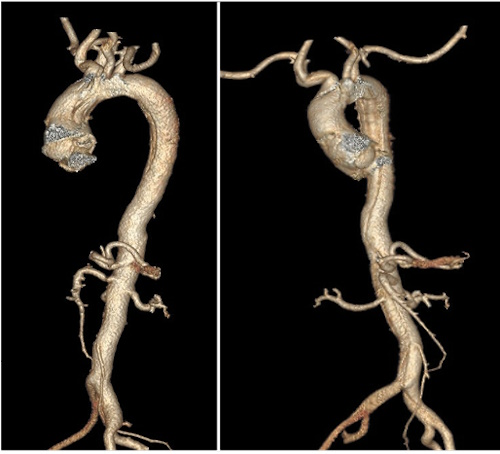
The article presents a clinical case of acute aortic dissection in a pregnant woman with Marfan syndrome. Marfan syndrome is a disorder associated with a high frequency of aortic adverse events and risk of mortality. Marfan syndrome during pregnancy is a predictor of potential complications in childbirth and the postpartum period, as well as acute surgical conditions, i.e. aortic dissection. Pregnancy with acute aortic dissection can be fatal to both the fetus and the mother, particularly to women with Marfan syndrome. The purpose of the case observation is to analyze the condition's clinical picture and applied imaging methods that allow for correct diagnostics and surgical treatment of the specified disease.
The article presents a case follow-up of a child with severe forms of recurrent infectious and oncological diseases at various stages of the differential diagnostic procedure for primary immunodeficiency (PID) identification. The most significant and frequently diagnosed PID in Russia and Europe is Nijmegen breakage syndrome (NBS). NBS is a recessive genetic disorder caused by NBN gene mutations, where dysimmunity accompanies a child's congenital anomalies. The paper describes the monitoring of a 17-year-old adolescent with Nijmegen breakage syndrome complicated by recurrent large B-cell lymphoma and reveals its findings. Initially, the patient was diagnosed with Nijmegen breakage syndrome at age 14 via molecular and genetic analysis after B-cell lymphoma recurrence.
LIFE SCIENCES. REVIEWS
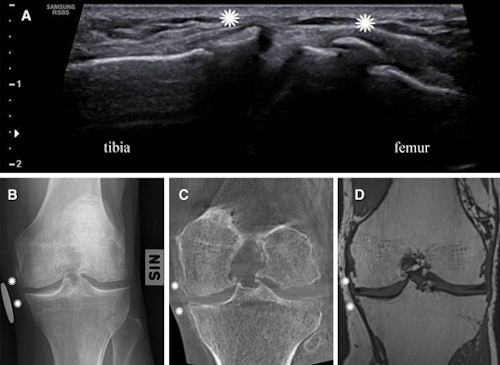
The article analyzes the relevant literature data on features of joint disease radiodiagnosis in patients with diabetes mellitus, given the condition's pathogenic peculiarities and the possibility of symptom identification. The main diabetes mellitus complications affecting joints are Charcot neuroarthropathy (Charcot foot), osteoarthritis, adhesive capsulitis, and diabetic polyneuropathy affecting peripheral nerves. Conditions affecting soft tissues include limited joint mobility syndrome (cheiroarthropathy, diabetic hand syndrome), carpal tunnel syndrome, stenosing tenosynovitis, Dupuytren's contracture, adhesive capsulitis (frozen shoulder), diabetic amyotrophy (diabetic sarcopenia), and diabetic muscle infarction (diabetic myonecrosis). The paper considers joint diseases radiodiagnosis and major diabetes mellitus complications based on pathogenesis of the specified condition. The standard radiological method for joint disease diagnostics is radiography. At the same time, this technique has disadvantages and may alter the real clinical picture of the disease. Ultrasound scanning enables enhanced diagnostics effectiveness. However, the most informative methods are computed tomography and magnetic resonance imaging. The authors conduct a comparative analysis of joint diseases' structural features, which are detected using the aforementioned radiological research methods. The personalized approach to radiodiagnosis in accordance with the disease stage, pathogenesis, and clinical aspects allows for improving the diagnostics effectiveness and subsequent treatment of joint diseases associated with diabetes mellitus.
LIFE SCIENCES. ORIGINAL RESEARCH
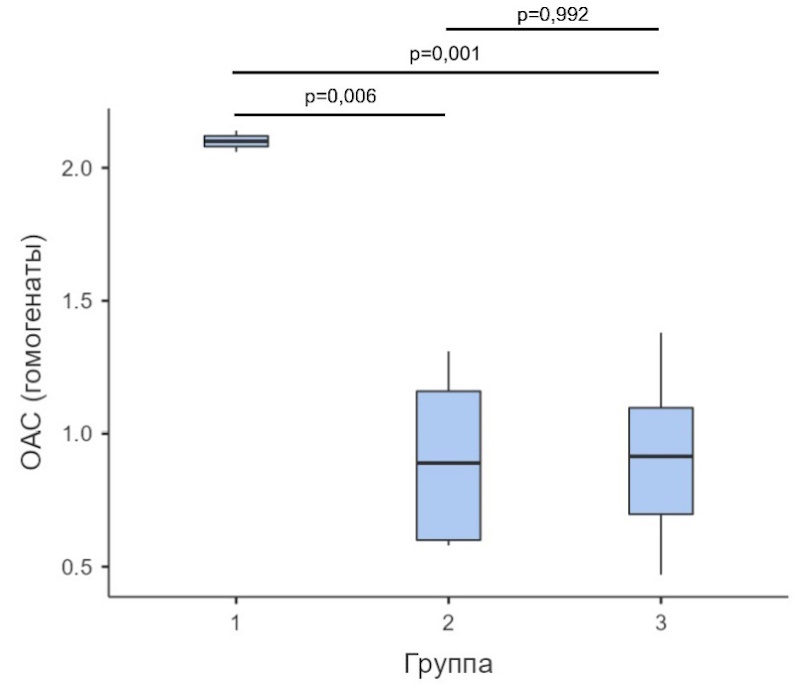
Oxidative stress is a key factor in endometriosis initiation and progression. Moreover, there is a need for specifying lipid peroxidation and antioxidant system functioning in endometriotic lesions, particularly depending on the disease severity. The authors examine the correlation between endometriosis severity and oxidative stress in homogenates of endometriotic lesions. The research includes 48 patients diagnosed with endometriosis of different severity (12 women with mild and 36 with severe) and 10 patients without endometrial disorders (control group). The article identifies the neutral lipid and phospholipid peroxidation products and total antioxidant capacity in homogenates of ectopic (endometriotic) and eutopic (normal) endometrium. The conducted statistical analysis comprises Shapiro – Wilk, Levene's, Kruskal – Wallis, Dwass – Steel – Critchlow – Fligner (DSCF) tests, and Fisher's F-test. Results reveal that levels of diene conjugates, ketodienes, conjugated trienes, as well as Schiff bases in the isopropanol phase are significantly higher in the eutopic endometrium compared to the ectopic endometrium. The levels of lipid peroxidation products within ectopic lesions appear to be higher in severe endometriosis rather than in mild disease forms. The antioxidant system analysis demonstrates that the total antioxidant capacity is 2 times lower in the ectopic endometrial tissues than in the eutopic endometrium. The findings confirm the importance of oxidative stress in endometriosis pathogenesis. The lipid peroxidation and antioxidant capacity decrease in the ectopic endometrium may be associated with the adaptation of endometriotic lesions to increasing oxidative stress. Further research requires increased sample size to clarify the aforementioned processes' role in disease progression.
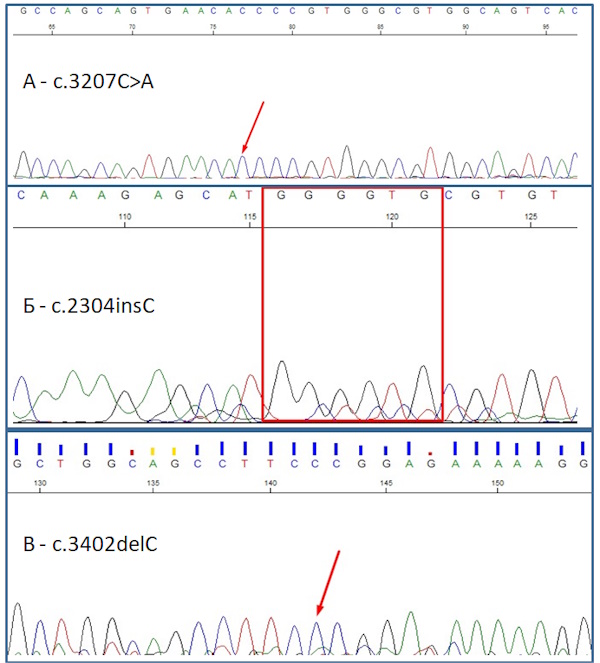
The purpose of the study is to develop and evaluate a test kit for detecting mutations in the ATP7B gene, i.e. the indicators of Wilson's disease, which are prevalent in Russia. Considering peculiarities of the Russian population, the paper includes the selection of 9 most frequently identified pathogenic gene variants, which contributes to the effective diagnostics of the aforementioned genetic disorder in the country. To detect the mutations, the authors create a molecular genetic test kit. It comprises a set of specific primers for targeted gene fragment amplification via polymerase chain reaction with subsequent Sanger sequencing or restriction analysis for variant identification. The conducted verification demonstrates high diagnostics accuracy, reliability, and applicability of the designed test kit, which enable its use by researchers in scientific and medical studies.
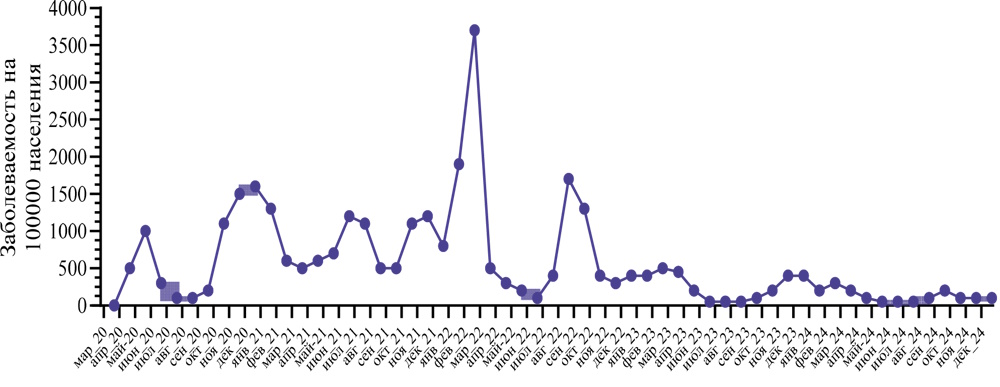
The paper aims to define the genetic structure (strains, serotypes) of coronavirus SARS-CoV-2 and influenza viruses as well as assess the infection rate among the Moscow population and suggest measures for effective management of the epidemiological situation. Patients with upper respiratory tract infections (URTI) symptoms undergo naso-oropharyngeal swabbing procedure. The taken samples are used in polymerase chain reaction (PCR) testing and next generation sequencing (NGS) by means of MiSeq system (Illumina, US) for SARS-CoV-2 and influenza А and В viruses detection. The authors perform a bioinformatic analysis of genome sequences using Iterative Refinement Meta-Assembler (IRMA 1.2.1), Basic Local Alignment Search Tool (BLAST 6), and Phylogenetic Assignment of Named Global Outbreak Lineages (PANGOLIN). From late 2021 to early 2022, the genetic structure of COVID-19 diagnosed in Moscow residents changed. Thus, the sublineage BA of the Omicron variant replaced the sublineage AY of the SARS-CoV-2 Delta strain. Consequently, the infection rate rose to 3700 per 100,000 people. Associated with the appearance of less virulent Omicron sublineages (XBB, JN.1, FliRT, KS1, LR1, LF, FL1), the rate between the end of 2022 and the start of 2025 stood at 100–500 per 100,000 individuals. Between late 2022 and early 2023, 64.3–97.6% of the specified population was infected with the H1N1 strain of influenza A. However, since January 23, 2023, the B variant became prevalent, counting 52.36–97.37% of all test swabs in early 2023. From the end of 2023 to the beginning of 2024, Moscow citizens contracted 2 novel H3N2 strains of influenza A: A/Massachusetts/01/2020 and A/Massachusetts/38/2019. From late 2024 to early 2025, Moscow residents were diagnosed with a newly emerged subclone of influenza A strain, i.e. H1N1, Hawaii/25/2020, and the Texas/43/2019 variant of influenza B. The outcomes of this research hold the potential to advance the modernization of PCR-based diagnostic kits, aid in the selection of vaccine strain candidates, and evaluate the effectiveness of established vaccines and antiviral treatments.